
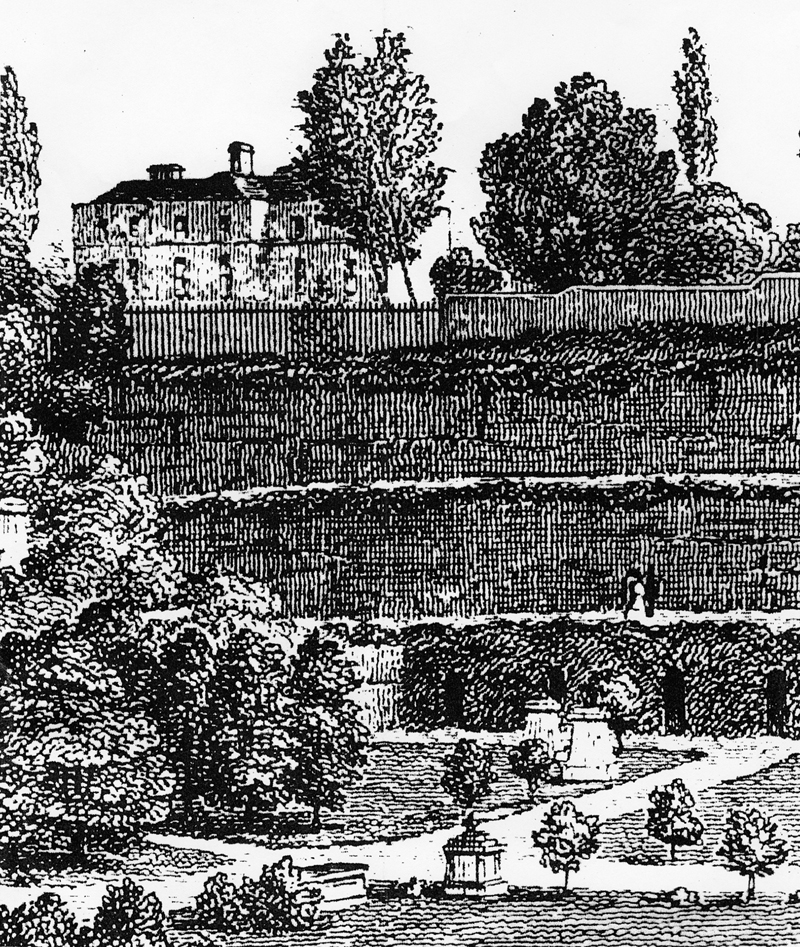
 Kaye House, a very large house overlooking the Key Hill Cemetery site (the former sand quarry) was the home of Charles Edge (Architect) 1800-1867.
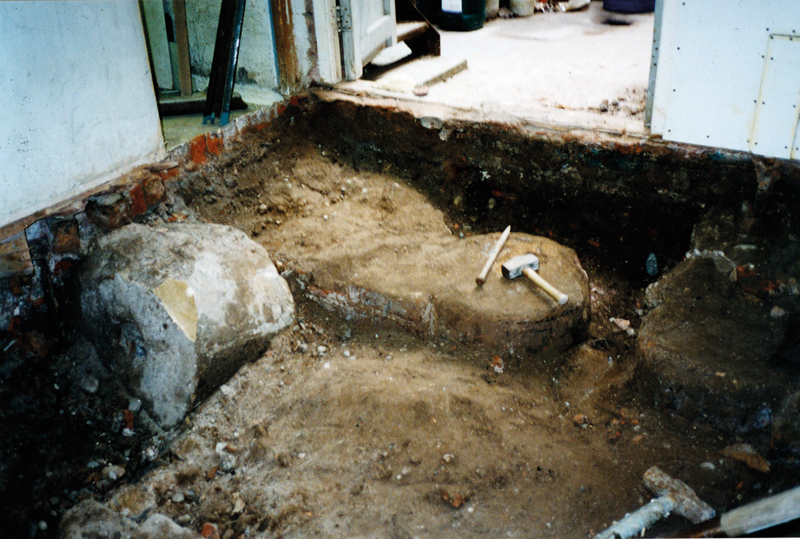
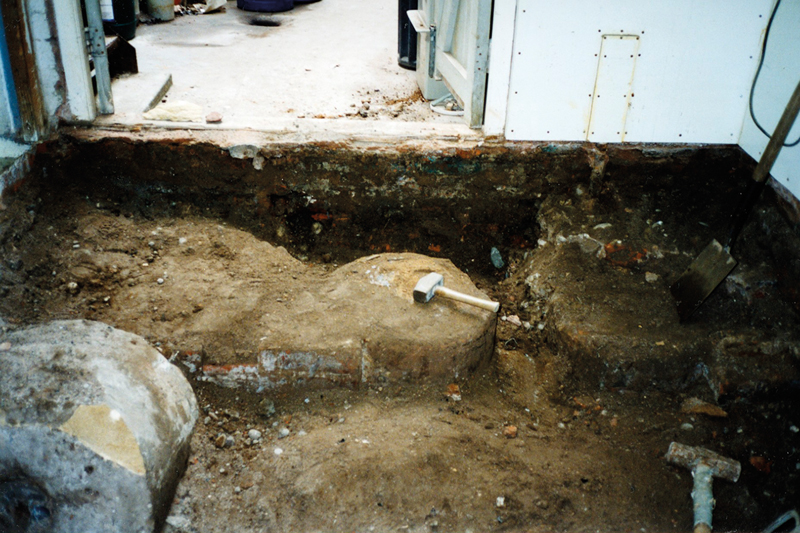
The house was demolished in 1892 but around fifteen years ago the base of several very large columns was unearthed in a building on the ‘cemetery-side’ of Hylton Street when T H Findings were excavating to lay a new workshop floor.
No-one in the various authorities was interested in looking at these columns, so, before they were buried in concrete The Hockley Flyer took the opportunity to take photographs.
These must have belonged to this famous architect’s house, as there could be no other explanation for classical Greek columns in this location.
‘Charles Edge, senior was an architect active, especially in Birmingham, in the 19th century. He was born around 1801 and died, in Edgbaston, on 21 July 1867.
He is particularly noted for his work on Birmingham’s Town Hall and Key Hill Cemetery.
Charles’ brother was Thomas Edge, whose son Francis, before becoming a clergyman, was an architect, perhaps training and working with his uncle. Charles himself was possibly trained by the self-taught Thomas Rickman and began his career in about 1827 producing classical Greek Revival buildings.
He was responsible for a number of buildings in the Bennett’s Hill and Waterloo Street development, living himself at number 18 Bennett’s Hill till 1840, but after that using the building only as his office.
He was highly adaptable though and developed his style over the decades that he worked.
Following are some of Charles Edge’s Jewellery Quarter commissions;
- 1827: Wesleyan Chapel on Constitution Hill (demolished)
- 1834-1862: Key Hill Cemetery and Chapel on Key Hill (chapel demolished)
- 1838: Regent Works on Regent Street (attributed by A. Foster)
- 1839: Victoria Works on Graham Street (attributed by A. Foster)
 The 1871 census is the last time Kaye Hill House appears. With the building of eleven houses in Key Hill Drive it appears that the house becomes No 12 and is used for manufacturing purpose only, and was demolished in 1892, the property bought by The Birmingham General Cemetery Co
Over the years the spelling of the house has changed from Kaye Hill, Keye Hill, and Key Hill.
Source: The Hockley Flyer Issue 342 December 2013
Printed in: Jewellery Quarter Heritage magazine Issue 1